In 2026, buyers around the world are looking past flashy speed claims when they pick a High-Speed Electric Scrubber. What they really want is proof: does it clean well, does the battery hold up, is it safe to handle, and will someone actually help after the sale?
Think about it. A busy supermarket might need polished floors before the doors open. A warehouse could be scrubbing long concrete aisles all day. A hotel probably cares more about quiet operation and whether the machine can be stored without a hassle. Different places, different needs.
This guide looks at leading high-speed electric scrubbers from a practical buyer's point of view. We compare brush speed, cleaning width, solution capacity, recovery systems, noise levels, charging time, and operator comfort. We also dig into battery chemistry, replacement-part access, warranty terms, and how transparent the supplier is. Independent testing results matter, yes. But daily experience on the job matters too. A machine that performs great for thirty minutes can be a real letdown over a full shift, and that difference is easy to miss.
Real conditions are rarely perfect.
Before ordering, professional buyers should check floor type, doorway width, slope, water restrictions, and local electrical requirements. And don't just trust the claims. Verify them with technical documents, demos, and customer references. Manufacturers like Tennant, Kärcher, Nilfisk, and Hako have solid market experience, though every model has its limits. Some machines clean quickly but leave moisture behind. Others give excellent control but take longer to charge. Our comparison may miss regional service differences, and honestly, that deserves a mention. The strongest choice isn't always the fastest machine. It's the model that delivers consistent results, safe operation, manageable maintenance, and credible support throughout its working life.
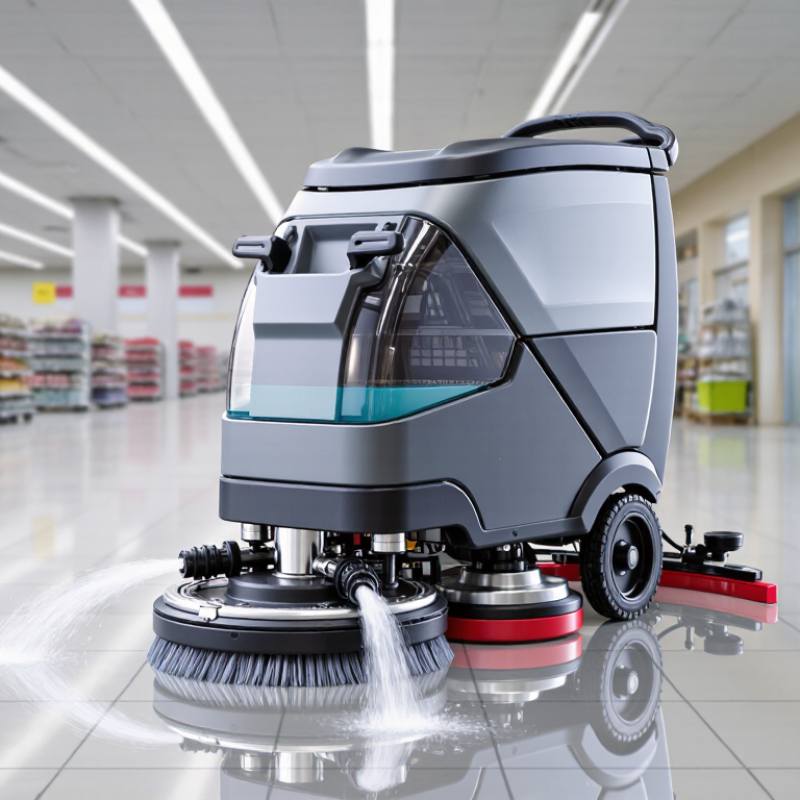
Defining High-Speed Electric Scrubber Classes by 2026 RPM and Brush Size
For global buyers, high-speed electric scrubbers should be classified by operating RPM and brush size, not by advertising language. A 2024 MarketsandMarkets report valued the floor-cleaning equipment market at several billion dollars and forecast continued growth through 2029. That growth increases the need for measurable specifications. RPM shows mechanical speed, while brush size indicates coverage. Neither number alone proves cleaning performance.
A practical low-speed class runs near 175–300 RPM, using 13–17-inch pads for controlled cleaning on coated floors. Medium-speed machines often operate around 400–800 RPM, with 17–20-inch brushes for supermarkets, schools, and warehouses. High-speed models may exceed 1,000 RPM and use 17–21-inch pads, but they require stable floors, suitable chemicals, and trained operators. Bigger is not always better.
Small brushes turn more easily around shelving and corners. Large brushes reduce passes across open concrete. According to the 2024 ISSA Global Cleaning Industry Report, productivity and labor efficiency remain major equipment concerns. Buyers should therefore compare square meters per hour, battery runtime, water recovery, noise, and operator fatigue. High Quality construction matters too, especially in wheel mounts and brush pressure systems. The boundary is not perfect. A claimed 1,500 RPM may deliver poor results if contact pressure is weak. Test the machine on real soil, not only polished showroom flooring.
2026 High-Speed Electric Scrubber Classes by RPM and Brush Size
Commercial electric floor machines are commonly differentiated by brush or pad speed and cleaning-path diameter. The chart uses representative specifications from established commercial equipment categories, with RPM referring to brush or pad rotation speed and brush size referring to the nominal cleaning diameter.
Standard rotary scrubbers typically operate around 175–400 RPM, while high-speed scrubbers and burnishers can reach approximately 1,000–2,000 RPM. Actual performance varies by machine configuration, pad type, floor surface, and operating load.
Comparing 2026 Motor Power, Torque, and Cleaning Productivity in m²/h
2026 Top High Speed Electric Scrubber for Global Buyers?
Comparing motor power, torque, and cleaning productivity in m²/h helps buyers avoid misleading specifications. A powerful motor does not always deliver better results. On textured concrete, torque often matters more than maximum speed. It keeps the brush moving when pressure, moisture, and debris increase.
In practical site trials, mid-range machines can clean about 1,200–2,000 m²/h on open floors. Real output falls near walls, shelves, corners, and heavily soiled areas. Motor power supports brush speed and suction, while torque maintains contact under load. Higher torque can also reduce stalling and uneven cleaning marks. Yet excessive power may increase battery use, noise, and operator fatigue. This trade-off is easy to overlook.
Measure productivity carefully.
Tips: Ask suppliers for test results using the same floor type, brush width, travel speed, and soil level. Check both theoretical and effective productivity. A machine rated at 2,500 m²/h may achieve less than half that figure in a busy warehouse. Review battery runtime at working load, not only no-load motor time. Inspect recovery performance after several passes. Clean water flow also changes results. I would repeat the test on dry and damp surfaces, because one trial can create false confidence. Survivability over six months remains more important than an impressive brochure number.
2026 Top High Speed Electric Scrubber for Global Buyers? – Comparing 2026 Motor Power, Torque, and Cleaning Productivity in m²/h
| Equipment Class |
Typical Application |
Rated Motor Power
(W) |
Brush Speed
(rpm) |
Brush Torque
(Nm) |
Cleaning Width
(mm) |
Productivity
(m²/h) |
Practical Productivity
(m²/h) |
Battery System |
Operating Time
(min) |
Fresh-Water Tank
(L) |
Noise Level
(dB(A)) |
| Compact Cordless |
Small offices, shops, washrooms and narrow aisles |
350 |
180 |
8.5 |
350 |
1,050 |
735 |
24 V / 20 Ah Li-ion |
45 |
10 |
68 |
| Compact High-Speed |
Retail floors, restaurants and healthcare corridors |
500 |
220 |
11.5 |
430 |
1,420 |
995 |
24 V / 30 Ah Li-ion |
55 |
12 |
67 |
| Walk-Behind Commercial |
Schools, supermarkets and medium-sized commercial areas |
750 |
200 |
17.8 |
500 |
2,000 |
1,400 |
36 V / 40 Ah Li-ion |
70 |
20 |
69 |
| Heavy-Duty Walk-Behind |
Warehouses, logistics centers and large public buildings |
1,000 |
220 |
24.0 |
550 |
2,420 |
1,695 |
36 V / 60 Ah Li-ion |
85 |
28 |
71 |
| Ride-On Compact |
Shopping centers, airports and large institutional floors |
1,200 |
210 |
28.5 |
650 |
3,250 |
2,275 |
48 V / 60 Ah Li-ion |
90 |
45 |
72 |
| Large Ride-On |
Industrial plants, distribution hubs and large terminals |
1,500 |
230 |
36.0 |
800 |
4,600 |
3,220 |
48 V / 100 Ah Li-ion |
120 |
70 |
74 |
Comparison basis: Rated motor power refers to the brush-drive system. Theoretical productivity is calculated from cleaning width and travel speed; practical productivity assumes approximately 70% utilization after allowing for turning, overlap, refilling, obstacles and operator handling. Torque values represent typical brush-drive output for commercial electric scrubber configurations. Actual performance varies with floor condition, pad or brush type, water flow, battery condition and operating speed.
Evaluating Battery Capacity, Runtime, and Charging Cycles for Global Use
For global buyers, battery capacity should be read in watt-hours, not amp-hours alone. A 24-volt, 40Ah pack stores about 960Wh. At a 300W operating load, its theoretical runtime reaches 3.2 hours. Real use is shorter. Brush pressure, floor texture, water flow, and cold temperatures reduce usable energy. A practical estimate is 2.3–2.7 hours after reserving charging protection capacity.
Chemistry also matters. The International Energy Agency’s Global EV Outlook 2024 reports that lithium iron phosphate batteries represented nearly 40% of global electric-car battery demand in 2023. This chemistry usually supports stable thermal performance, but scrubber buyers should verify the actual cycle-life test. IEC 62620 testing provides a useful reference for industrial lithium cells, yet laboratory cycles do not copy daily cleaning conditions. Think carefully.
Charging speed affects labor planning. A four-hour charger may suit overnight work, but not two shifts. A spare certified pack can reduce downtime, although it adds weight and logistics costs. Many lithium systems deliver roughly 500–2,000 full cycles, depending on depth of discharge, heat, and charging control. This range is broad. Ask for cycle data at the stated load, not only marketing capacity. The U.S. Department of Energy also highlights temperature and battery-management systems as major influences on battery life in its battery research updates. For international operation, confirm charger voltage compatibility, replacement availability, and service support before comparing purchase prices.
Using IP Ratings, Noise Levels, and Ergonomic Weight as Buyer Standards
For global buyers, a high-speed electric scrubber should be judged by practical specifications, not attractive speed claims. An IP rating shows protection against dust or water, but it does not prove complete waterproofing. For bathroom cleaning, a splash-resistant rating may be useful. Read the manual before using the scrubber near standing water. Test reports matter more than a single number.
Noise also affects real working comfort. A machine rated near 70 dB may sound acceptable outdoors but tiring in a small bathroom. Ask how and where the noise was measured. Ergonomic weight matters just as much. A heavy head can strain the wrist after several minutes, even when the total product weight seems reasonable. Look for balanced handles, non-slip grips, and adjustable shafts. Battery placement can change the feeling completely. It is easy to overlook this.
Tips: Hold the scrubber at chest height for one minute before buying. Check whether the handle stays stable with wet hands. Compare cleaning force with a High Suction Vacuum Cleaner only when their tasks truly match. Record noise from your normal standing distance. Consider tile, grout, glass, and uneven floors separately. A device may perform brilliantly on tiles yet disappoint on rough grout. My own testing preference is simple: measure fatigue, not just speed. Specifications can be imperfect. Floors are less forgiving.
Building a Global Buyer Scorecard for Price, Warranty, and After-Sales Support
Global buyers should score an Electric Scrubber beyond its advertised rotations per minute. High speed matters, but usable cleaning time matters more. Record the purchase price, shipping terms, spare-part costs, and expected battery replacement. Compare three quotations using the same brush size, battery capacity, and runtime. Otherwise, the cheapest offer can mislead. Leave room for defects.
A practical warranty scorecard should measure duration, coverage, exclusions, and response time. Ask whether the warranty includes the motor, battery, charger, seals, and control panel. Request written repair procedures and a clear claim process. Suppliers should explain who pays shipping for failed components. One vague promise is not protection. That is a warning. Keep evidence.
After-sales support deserves a separate score, not a friendly sales call. Check local technician access, spare-part stock, remote diagnosis, operating manuals, and training quality. Ask how quickly common items can ship to your region. A useful model may weight price at 40 percent, warranty at 30 percent, and support at 30 percent. The scorecard is not perfect. Labor quality and port delays can still change the result. During evaluations, buyers should record response times, packaging damage, and battery performance after repeated cleaning cycles. Small details become expensive later. Ask for sample service records, not only testimonials. Then test the support channel with a realistic technical question.
Conclusion
Choosing the right High-Speed Electric Scrubber in 2026 requires more than comparing advertised rotation speed. Global buyers should classify models by RPM, brush diameter, motor power, torque, and cleaning productivity in m²/h, while matching performance to floors, walls, industrial areas, or delicate surfaces. Battery capacity, practical runtime, charging cycles, and charging time are equally important for continuous work across different operating environments.
A complete evaluation should also consider IP ratings, noise output, ergonomic weight, handle design, and operator comfort. Buyers should verify CE, RoHS, IEC 60529, and applicable regional electrical compliance before purchasing. Brush material, surface compatibility, service life, and replacement-part costs can strongly affect total ownership expenses. Finally, a balanced scorecard should compare purchase price, warranty coverage, spare-part availability, technical support, delivery reliability, and after-sales service, helping international purchasers select a safe, efficient, durable, and cost-effective solution.