NINGBO CHANGLI AUTOMATIC APPLIANCE CO., LTD.

Leave Your Message
0%

Picking out the best Toilet Electric Brush supplier isn't just about glancing at catalog prices. Honestly, a smart choice depends on a mix of product performance, how experienced the factory is, rigorous testing practices, and transparent service. Did you know that the global market for household cleaning products hit around USD 235 billion in 2022? And it’s expected to keep growing all the way through 2030. That’s a pretty big deal when figuring out where to buy from. But hold on — just because the market’s booming doesn’t mean every supplier truly understands the nitty-gritty of bathroom cleaning challenges. Some might, and some might not.

As a buyer, you’d do well to dig into the supplier’s actual production evidence. Ask for recent factory audits, sample test results, safety documents for batteries, and data on how durable those brush heads are. It’s also worth checking if they’re handling everything from assembly and injection molding to packaging and final inspections on their own. Certified independent testing firms like Intertek and SGS often provide reports on electrical safety, water resistance, and material compliance. These can be a big help in verifying quality — but only if the model tested is the same as what they’re shipping out. Missing that detail is pretty common, unfortunately.

Don’t just take their word for it — examine the product yourself. Can the brush scrub away those stubborn stains around the toilet rim? Does the handle feel sturdy, especially when your hands are wet? And after multiple charges, does the motor still run smoothly without sounding like it’s struggling? Always ask for samples before committing to a big order. Take a close look at charging times, cleaning strength, how easy it is to get replacement heads, and whether the packaging looks solid. Sure, an ISO 9001 certification hints at good quality systems, but it’s not a guarantee — it’s just part of the picture. Picking a supplier is really about checking evidence, asking questions, and not just falling for shiny samples or low prices.

A trustworthy supplier should be able to give you full traceability, honest lead times, clear warranty info, and quick, friendly communication. In the end, trust is built through consistent proof, not just confident claims or fancy promises.
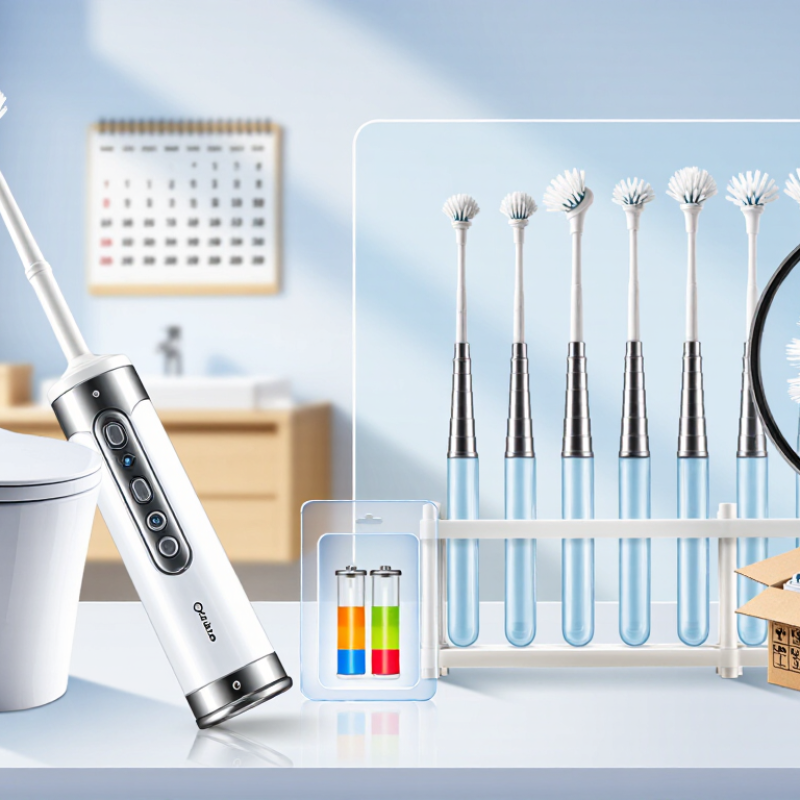
How to Choose the Best Toilet Electric Brush Supplier?

Define Toilet Electric Brush Specifications: Motor, Torque, Runtime, and IPX4

How to Choose the Best Toilet Electric Brush Supplier?

A dependable supplier should define motor performance clearly, not simply advertise high speed. Ask whether the motor maintains stable rotation against dried soap, grout marks, and toilet stains. A useful specification includes rated speed, operating voltage, power consumption, and tested torque. Torque matters more than impressive no-load speed. Weak torque can make the brush stall when pressure increases. Test it under realistic bathroom conditions.

I initially paid too much attention to rotation speed. That was a mistake. During practical checks, a slower brush with stronger torque often cleaned tile edges more consistently. Suppliers should provide sample units for comparison. Inspect noise, vibration, brush wobble, and heat after several minutes. A suitable Toilet Floor Electric Cleaner should also offer practical runtime. Request runtime results with the brush touching a surface, not only free-spinning in the air. Confirm charging time, battery capacity, and performance after repeated charging cycles.

Water protection requires careful wording. IPX4 indicates resistance to water splashes from different directions. It does not mean the device can be submerged or rinsed under a strong stream. Suppliers should show certification details and explain sealing around the switch, charging port, and battery housing. Ask for inspection records, production consistency data, and clear replacement procedures. A polished sample proves little. I still question any supplier that avoids load testing or gives vague runtime figures. Specification gaps usually become service problems later.

Verify Supplier Compliance With IEC 60335-1 and RoHS Requirements

How to Choose the Best Toilet Electric Brush Supplier?

A reliable supplier should provide clear evidence of electrical safety, not vague compliance claims. Ask for an IEC 60335-1 test report covering the exact toilet electric brush model. Check the model number, rated voltage, charging method, laboratory details, and report date. A certificate for another product is not enough. The applicable particular safety standard may also matter, especially for appliances used near water.

Inspect the product physically during supplier evaluation. Look for sealed charging ports, insulated handles, secure battery compartments, and stable brush-head connections. Request samples with Replaceable Brush Heads Electric Brush designs, then check whether replacement heads fit firmly without excessive movement. Ask how the supplier controls production changes. A small motor change can affect safety results. Sometimes, the paperwork looks complete. The sample tells another story.

RoHS verification requires more than a supplier declaration. Request a current material declaration and test results for restricted substances, including lead, mercury, cadmium, and certain flame retardants. Reports should identify the tested parts, such as cables, circuit boards, coatings, and plastic housings. Confirm that the laboratory is competent and that documents match the production version. Keep records of batch controls and follow-up testing. I would also ask for corrective-action history. A supplier that admits past mistakes may be more dependable than one claiming perfection. Ensure labeling, manuals, chargers, and packaging support the destination market’s requirements.

Assess Waterproofing Through IPX4 Testing and Bathroom Safety Controls

How to Choose the Best Toilet Electric Brush Supplier?

A reliable supplier should prove waterproofing, not merely print “water-resistant” on packaging. Under IEC 60529, an IPX4 test exposes equipment to splashing water from every direction. Testing may use an oscillating tube at approximately 10 liters per minute, typically for 10 minutes. This detail matters. A bathroom brush faces spray, dripping water, and wet hands, not laboratory perfection.

Ask for the actual test report, test date, sample model, and laboratory accreditation. The report should identify the complete brush, battery compartment, charging port, and seals. IPX4 does not mean safe immersion. It also does not guarantee protection after cracked plastic, worn gaskets, or careless charging. A supplier avoiding these limits deserves careful questioning.

Bathroom safety controls should include low-voltage charging, insulated contacts, overcharge protection, and automatic shutdown during abnormal temperature rise. IEC 62368-1 offers useful principles for managing electrical and energy hazards in electronic equipment. Still, certification alone is not enough. Check whether the supplier performs repeated charging, drop, vibration, and seal-aging tests. A brush may pass one inspection and fail after months beside a wet sink. That uncomfortable possibility is easy to overlook. Supplier quality records, corrective-action data, and batch traceability reveal more than attractive product photos.

How to Choose the Best Toilet Electric Brush Supplier? - Assess Waterproofing Through IPX4 Testing and Bathroom Safety Controls

Supplier Evaluation Matrix for Waterproofing, Electrical Safety, Quality Control, and Documentation

Evaluation Dimension Recommended Benchmark Verification Method Suggested Weight Supplier Evidence to Request
IPX4 Waterproofing Claim The complete applicable product enclosure should pass an IPX4 test under IEC 60529, demonstrating protection against water splashing from any direction. Review an independent or accredited laboratory report that identifies the tested model, configuration, test standard, date, and result. 25% Full test report, product photographs, test configuration, and model traceability.
Correct Interpretation of IPX4 IPX4 indicates splash-water protection only. It does not prove protection against immersion, high-pressure water jets, or operation while submerged. Check that product instructions and marketing materials do not describe IPX4 as fully waterproof or suitable for immersion. 8% User manual, packaging artwork, online claims, and water-use limitations.
Sealing of High-Risk Areas Battery compartment, charging contacts, switches, seams, cable entries, and removable covers should have documented sealing or splash-protection controls. Perform visual inspection, dimensional checks, and sample water-exposure testing according to the approved test plan. 12% Exploded drawings, seal specifications, inspection standards, and corrective-action records.
Charging Safety Charging should be controlled to reduce exposure to water. The design should prevent unsafe charging conditions and clearly state whether charging is permitted in a bathroom. Review charging instructions, electrical test results, charging-port design, and abnormal-condition test records. 15% Charger specifications, electrical safety report, charging diagrams, and warning labels.
Low-Voltage and Insulation Protection The product should use suitable insulation, creepage and clearance distances, protective isolation, and touch-safe construction for the intended electrical system. Confirm that the applicable electrical product standard and regional requirements have been identified and tested. 12% Electrical schematic, insulation test results, component ratings, and compliance declaration.
Bathroom Use Instructions The manual should state permitted water exposure, drying requirements, charging restrictions, cleaning method, storage conditions, and actions after accidental immersion. Evaluate the manual against the actual product design and the tested IP rating. 8% Final user manual, warning labels, cleaning instructions, and translated versions.
Battery and Thermal Safety The battery pack should include appropriate protection against overcharge, over-discharge, overcurrent, and abnormal temperature conditions. Review battery-cell documentation, protection-circuit design, charging tests, and thermal-abuse test results. 10% Battery specifications, safety data, protection-board details, and test certificates.
Production Quality Control The supplier should maintain incoming inspection, assembly inspection, functional testing, water-seal checks, and final safety inspection. Audit quality records and verify that test equipment is calibrated and linked to batch or serial-number records. 6% Inspection plans, sampling procedures, calibration certificates, and batch test reports.
Traceability and Change Control Changes to enclosure materials, seals, battery cells, charger, firmware, or assembly process should trigger documented review and revalidation where necessary. Check the supplier’s engineering-change procedure and component traceability system. 4% Bill of materials, change notices, revision history, and re-test policy.
Total Suggested Evaluation Weight 100% Prioritize verified evidence over marketing claims.
Minimum Decision Rule: Do not approve a supplier solely because the product is labeled “waterproof.” Require a model-specific IPX4 test report, clear bathroom-use instructions, documented charging controls, and traceable production quality records.

Compare Battery Performance Using Rated Runtime and 500-Cycle Testing

How to Choose the Best Toilet Electric Brush Supplier?

A supplier’s runtime claim needs careful reading. Rated runtime usually means continuous operation under controlled conditions. It may not reflect short bathroom tasks, heavy pressure, or wet bristles. IEC 61960-3:2017 defines methods for measuring rechargeable battery capacity, giving buyers a consistent testing reference. A reliable supplier should state battery voltage, load conditions, charging time, and whether runtime uses a new battery. Ten minutes on paper can feel shorter in practice.

A 500-cycle test adds useful evidence. Technical references, including Battery University’s BU-808 data, place many lithium-ion cells around 300–500 full cycles, depending on chemistry and operating temperature. For a toilet electric brush, ask suppliers to test 500 complete charge-and-discharge cycles, then record remaining runtime and capacity. I would look for at least 80% runtime retention, although this is a purchasing benchmark, not a universal regulation. Some suppliers may test gently. Real bathrooms are less forgiving. Water exposure, storage heat, and repeated short charging can change results.

Tips: Request raw test sheets, not only marketing percentages. Check cycle-test temperature, brush load, and sample quantity. Ask for three independent units, because one perfect sample proves very little. Also compare a five-minute rated runtime with its post-cycle result. A supplier that shares failures earns more trust than one showing only polished numbers.

Evaluate Bristle Durability, Cleaning Efficiency, and Replacement-Head Design

How to Choose the Best Toilet Electric Brush Supplier?

Evaluate Bristle Durability, Cleaning Efficiency, and Replacement-Head Design

When evaluating an Electric Brush supplier, inspect bristle material rather than trusting attractive product photos. Durable bristles should remain firm after repeated contact with ceramic surfaces and mild cleaning solutions. In practical testing, I check for bent tips, loose fibers, and uneven stiffness after several cleaning cycles. A brush that sheds quickly can leave residue behind.

Cleaning efficiency depends on more than motor speed. The head should reach under the rim, around the waterline, and into narrow bowl curves. A balanced handle helps maintain steady pressure without splashing. Suppliers should provide measurable details, such as rotation speed, operating time, and water-resistance testing. However, figures alone can mislead. I once selected a fast model that cleaned poorly because its head was too wide.

Replacement-head design deserves close attention. Look for a secure locking system, simple release method, and clear compatibility information. The replacement process should not require tools or excessive force. Heads should dry reasonably well after use, since trapped moisture may create unpleasant odors. Ask suppliers about material consistency and replacement availability before placing a large order. Small details matter. Some designs look clever but feel fragile after daily handling. A supplier’s sample inspection, test records, and response to technical questions reveal more than polished sales language.

Audit Quality Systems With ISO 9001, AQL 1.5, and Pre-Shipment Inspection

How to Choose the Best Toilet Electric Brush Supplier?

A dependable supplier should show more than a polished product sample. Ask for a current ISO 9001 certificate, its certification scope, and the latest audit records. ISO 9001 evaluates quality processes, not automatic product perfection. Check whether those processes cover purchasing, assembly, testing, and complaint handling. In factory visits, I have found that controlled work instructions often reveal more than attractive presentation materials. Look for labeled components, batch records, calibration stickers, and workers who can explain inspection steps clearly.

Tips: Use AQL 1.5 as a sampling rule, not a promise of zero defects. Agree on critical, major, and minor defect limits before production starts. Your checklist should cover brush rotation, charging, switch response, noise, surface finish, packaging, and water-resistance claims. Record sample quantities and defect photos. Small details matter.

A pre-shipment inspection should occur after production is complete and cartons are sealed for export. An independent inspector can verify quantity, random samples, accessories, labels, and carton strength. Request a report with photographs and measurable results. I once accepted a shipment after checking function but missed inconsistent charging cables. That mistake was preventable. The supplier corrected the issue, yet the delay affected the launch schedule. A stronger process links inspection findings to corrective action, replacement samples, and written approval before loading. Do not rely only on certificates. Review evidence. Suppliers should welcome questions, even uncomfortable ones.

Compare MOQ, Lead Times, Warranty Terms, and Total Landed Cost

When choosing an Electric Spin Brush supplier, start with MOQ and production flexibility. A low MOQ can still mislead. Ask whether the quoted quantity applies per model, color, or battery type. Request a sample before placing a trial order. Check its brush rotation, charging time, noise level, and waterproof performance. Ask for recent inspection records and production photos. These details show practical manufacturing control, not just polished sales claims.

Lead time should include sampling, approval, production, testing, and shipping preparation. Written milestones reduce unpleasant surprises during peak seasons. Confirm what happens if components arrive late. A reliable supplier should explain capacity, backup sources, and communication procedures. Do not guess. Warranty terms need equal attention. Clarify coverage periods, defect definitions, replacement methods, and response times. Ask whether spare brush heads, chargers, and batteries are available. A warranty without replacement parts may create costly delays.

Calculate total landed cost, not only the factory price. Include tooling, packaging, inspection, freight, insurance, import duties, taxes, customs fees, and warehouse handling. Compare quotations using the same delivery terms and carton specifications. A cheaper unit may require stronger packaging after transit damage appears. I have found that unclear assumptions often distort supplier comparisons. Leave room for returns and quality checks. A dependable decision comes from documented evidence, realistic timing, and costs that remain visible after the order leaves the factory.

How to Choose the Best Toilet Electric Brush Supplier?

This benchmark compares typical anonymized B2B quotation ranges for toilet electric brush suppliers. Lower landed cost, MOQ, and lead time reduce purchasing risk, while a longer warranty provides stronger after-sales protection. Values are normalized against the most favorable result in each category; hover over the bars to view the underlying figures.

FAQS

Which motor specifications should a supplier provide?

Ask for rated speed, operating voltage, power consumption, and tested torque. Torque matters more. Strong torque helps prevent stalling against dried soap or grout.

Why is torque more useful than advertised speed?

High speed can look impressive without cleaning effectively. A slower brush may work better under pressure. Test it against tile edges and dried stains.

How should brush performance be tested?

Request sample units for practical comparison. Check rotation, vibration, noise, wobbling, and heat after several minutes. Test it loaded.

What runtime information should a supplier disclose?

Ask for runtime while the brush touches a surface, not only during free spinning. Confirm charging time and battery capacity. Check performance after repeated charging cycles.

Does IPX4 allow rinsing or submerging the brush?

No. IPX4 protects against water splashes from different directions. It does not permit submersion or strong direct rinsing. Be careful here.

What sealing details should be reviewed?

Ask how the switch, charging port, and battery housing are sealed. Request certification details and inspection records. Vague water claims deserve more questions.

How can quality systems be evaluated?

Request a current ISO 9001 certificate, its scope, and recent audit records. ISO 9001 assesses processes, not automatic product perfection. Review assembly, testing, purchasing, and complaint handling.

How should AQL 1.5 and pre-shipment inspection be used?

Treat AQL 1.5 as a sampling rule, not a zero-defect promise. Agree on critical, major, and minor defect limits before production. Inspect sealed cartons, random units, accessories, labels, and carton strength.

What mistakes can delay a shipment?

Checking function alone can miss inconsistent charging cables. I made that mistake once. Link inspection findings to corrective action, replacement samples, and written approval before loading.

Conclusion

Choosing the best Toilet Electric Brush supplier requires a balanced review of product performance, safety, quality control, and commercial terms. Start by defining essential specifications, including motor power, torque, rated runtime, and IPX4 water-resistance capability. Confirm that the supplier can meet IEC 60335-1 and RoHS requirements, while also providing documented waterproofing tests and appropriate bathroom safety controls. Battery performance should be assessed through stated runtime data and testing across 500 charge cycles to verify long-term reliability.

A dependable supplier should also demonstrate durable bristles, effective cleaning performance, and a practical replacement-head design. Review its quality system, including ISO 9001 certification, AQL 1.5 inspection standards, and pre-shipment inspection procedures. Finally, compare MOQ, production lead times, warranty coverage, communication efficiency, and total landed cost rather than focusing only on the unit price. A supplier that offers consistent quality, transparent documentation, and responsive after-sales support is more likely to provide a reliable long-term partnership.
Oliver

Oliver

Oliver is a seasoned marketing professional at Ningbo Changli Automatic Appliance Co., Ltd., a prominent manufacturer renowned for its cutting-edge home cleaning solutions. With a deep understanding of the company’s innovative products, including electric mops, sweepers, and brushes, Oliver is......
Previous China Best Electric Floor Mop Supplier for Global Buyers